

 Tiếng Việt
This article examines the role of operational KPIs in enterprise management, why existing KPIs often fail to effectively control performance, and how real-time measurement can address this gap.
What Are Operational KPIs? (SEO-Optimized Definition)
Operational KPIs are metrics that measure the performance of each step within a workflow, updated in real time to help businesses monitor operations and make decisions during execution.
Unlike outcome-based KPIs, operational KPIs do not simply indicate whether targets are met. Instead, they answer a more critical question:
How is performance unfolding—and where should adjustments be made?
When KPIs No Longer Enable Performance Control
Over the years, KPIs have become a familiar tool in corporate management. From finance and sales to human resources, most activities are quantified through specific metrics. However, a notable reality is that as KPI systems become increasingly dense, organizations’ ability to control operational performance does not improve proportionally.
Many organizations still struggle to detect process issues in a timely manner, respond slowly to changes, and rely heavily on end-of-period evaluations. This raises a fundamental question: is the issue not a lack of KPIs, but rather how they are designed and used?
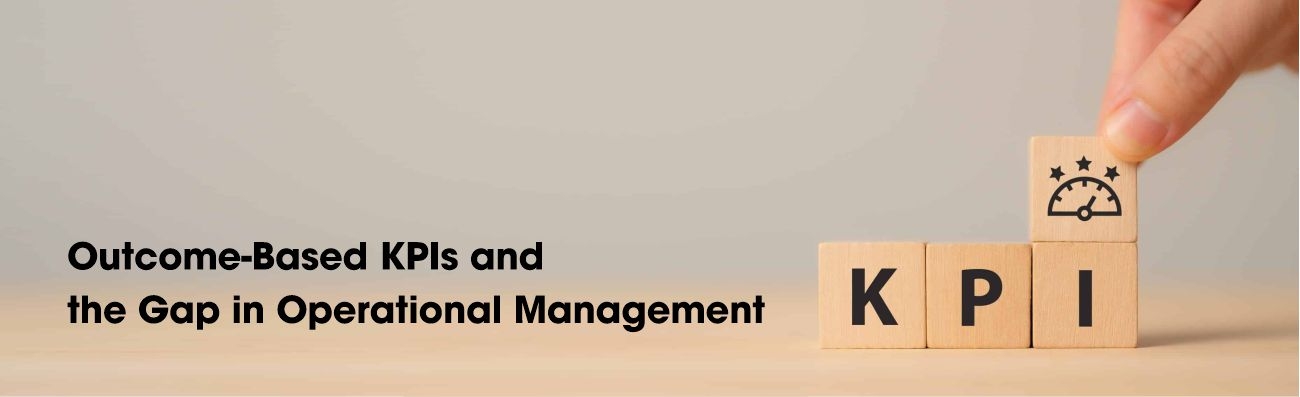
Most KPIs today focus on output results such as revenue, profit, and goal completion rates. While these indicators play a critical role in evaluating overall performance, they are inherently retrospective—they only reflect what has already happened.
According to research by Harvard Business Review, companies that focus primarily on outcome-based KPIs often face difficulties in controlling operational processes due to the lack of metrics that reflect performance at each step. When only final results are considered, managers struggle to identify root causes and cannot intervene promptly when problems begin to emerge.
For example, a business may know that revenue has declined by 15%, yet still be unable to determine which stage of the sales process is experiencing issues, at which step the conversion rate is dropping, or where the team is losing efficiency.
In such cases, KPIs only help identify the problem but do not help resolve it.
When KPIs Are Disconnected from Processes
A common limitation is that KPIs are designed separately from actual operational workflows. Metrics exist in reports but are not directly linked to specific steps within processes.
This leads to a paradox: businesses may know they are “missing KPI targets” but cannot pinpoint exactly where the issue lies. When KPIs fail to reflect the flow of work, they cease to be management tools and become merely evaluation instruments.
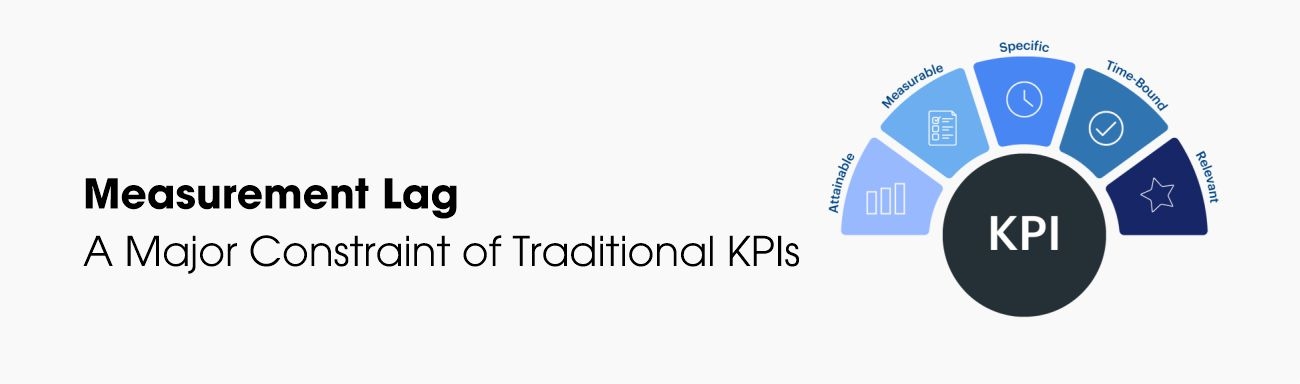
Most KPI systems are still measured on daily, weekly, or monthly cycles. This creates a time lag between when a problem occurs and when it is detected.
According to Deloitte, organizations that leverage real-time data significantly improve responsiveness and operational efficiency. In contrast, when KPIs are only updated periodically, businesses often address issues only after they have already become consequences.
In today’s competitive environment, such delays can directly impact costs, timelines, and customer experience.
KPIs That Do Not Drive Action
Another critical issue is that KPIs are often not linked to concrete actions. Metrics are tracked, reported, and compared, but they do not trigger timely operational responses.
Gartner notes that many organizations fail to translate data into business value due to a lack of connection between measurement indicators and execution processes. When KPIs are not accompanied by alert mechanisms or action guidelines, they cannot effectively support decision-making.
Operational KPIs: The Missing Layer of Measurement
In response to the limitations of traditional KPIs, an increasing number of organizations are shifting toward operational KPIs. These metrics measure the performance of each step within a process, rather than focusing solely on final outcomes.
Operational KPIs enable businesses to:
- Monitor work progress in real time
- Detect bottlenecks early in the process
- Intervene promptly before issues escalate
More importantly, operational KPIs provide control during execution, rather than merely evaluating performance after completion.
From Measurement to Execution: The Role of Operational Data
KPIs truly deliver value only when they are connected to operational data—data that reflects the real-time status of work. This transforms KPIs from static statistics into dynamic management tools.
When KPIs are continuously updated and integrated with workflows, organizations can:
- Identify issues as soon as they arise
- Make decisions based on current data
- Optimize performance in real time
This marks a critical shift from “management by reporting” to “management by data.”
With a focus on building operational data platforms, SiciX solutions enable businesses to design and monitor KPIs directly linked to each step in their workflows.
KPIs are not only displayed on dashboards but also::
- Updated in real time
- Integrated with processing workflows
- Trigger alerts and actions when anomalies occur
As a result, KPIs evolve from end-of-period evaluation tools into continuous decision-support mechanisms throughout operations.
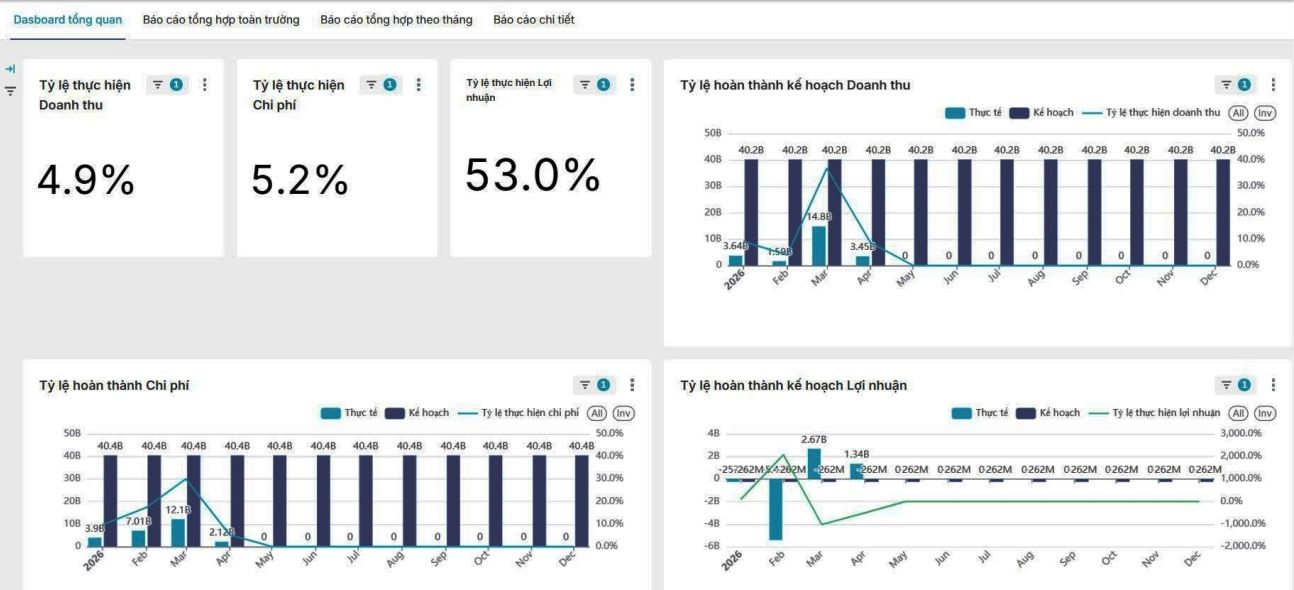
KPIs are not a new concept in management, but the way they are used requires reassessment. Measuring more does not necessarily mean controlling better.
In today’s context, competitive advantage lies not in the number of KPIs, but in the ability to design KPIs that are embedded in operations, updated in real time, and capable of driving timely actions.
Operational KPIs, therefore, are not just an additional layer of metrics—they form the foundation for improving decision quality and overall performance.
Contact SiciX Technology experts for consultation


Block "blog" not found