
HR – When the Job Is About More Than Just Hiring People

A candidate declines a job offer just hours before signing the employment contract. An employee wants to resign after months of mounting pressure. A new policy needs to be implemented, yet it receives mixed reactions across the organization.

These are situations that Human Resources professionals face on a regular basis. Yet for many people, the image of HR is still often associated with job interviews or recruitment posts published every day.

“HR just posts job openings, conducts interviews, and hires people.”

This is one of the most common perceptions about Human Resources—a simple and understandable one, but also an incomplete one.

In reality, if HR were limited to recruitment alone, it would not have become one of the functions that directly influences how an organization operates and grows.

With more than 10 years of experience in the field, Ms. Nguyen Ha Thu, Head of Human Resources and Administration at SiciX, agrees that recruitment is the most visible aspect of HR. However, she believes it is only the starting point.

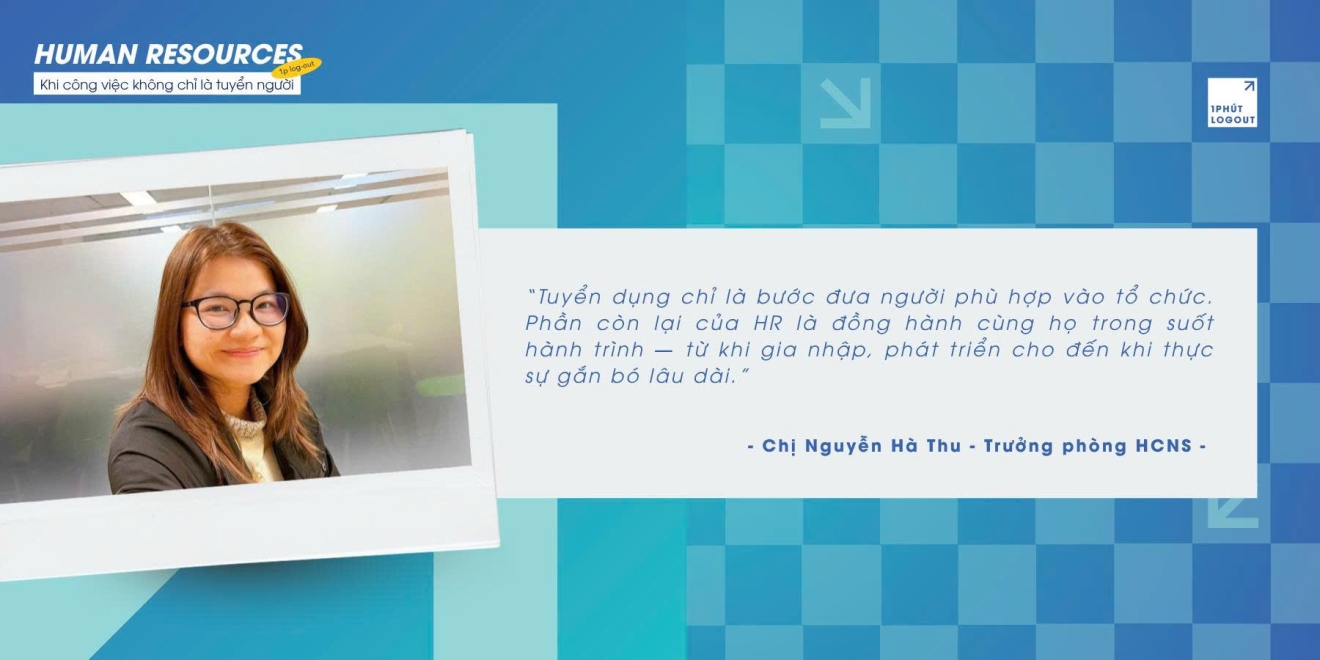
“Recruitment is simply the process of bringing the right people into the organization. The rest of HR’s role is to accompany them throughout their journey—from onboarding and development to long-term engagement and retention.”

From this perspective, HR’s work is not defined by what people see on the surface, but by the entire system behind the scenes—where processes are designed, policies are refined, and people-related issues are addressed every day.
The Work Behind the Scenes That Often Goes Unnoticed

Although rarely discussed, much of an HR professional’s time is devoted to behind-the-scenes responsibilities.

This may include standardizing processes, updating policies, ensuring legal compliance, or handling issues related to employee relations—matters that rarely fit into any predefined checklist.

“Some situations don’t have a clear right-or-wrong answer. HR professionals need to understand people while also safeguarding organizational principles,” Ms. Ha Thu shared.

HR also does not work in isolation. The function continuously collaborates with department managers to address workforce challenges ranging from organizational structure and hiring plans to performance evaluation and team development.

These responsibilities may not always be visible, but they form the foundation that enables an organization to operate smoothly and sustainably.

HR in Technology Companies: Beyond Administrative Operations

According to Ms. Ha Thu, one of the most significant changes in the HR profession comes from the evolution of the workplace itself—particularly within technology companies such as SiciX.

In this environment, HR is no longer merely an administrative function.

“Workforce requirements change very quickly, which means HR must work closely with business units. The role is no longer limited to hiring talent; it also involves contributing to how teams are structured, managed, and developed.”

At SiciX, hiring needs are closely linked to digital transformation projects, product development initiatives, and solution implementation for customers. As a result, the HR team must continuously stay aligned with business requirements from specialized departments while adapting to the rapid pace of change within the technology labor market.

Speed has become a necessity, but it comes with increased pressure and higher expectations regarding capability and expertise.

Beyond recruitment, HR also contributes to building a work environment that aligns with the unique characteristics of a technology company—where project teams require flexible collaboration, continuous learning, and the ability to adapt quickly to changes in customer needs and market dynamics.

HR as the Connector Within a Growing Organization

In a growing organization, HR plays another role that is often overlooked: connecting people.

Beyond organizing internal activities, HR serves as the bridge between employees and the organization—listening, facilitating alignment, and communicating messages in both directions.

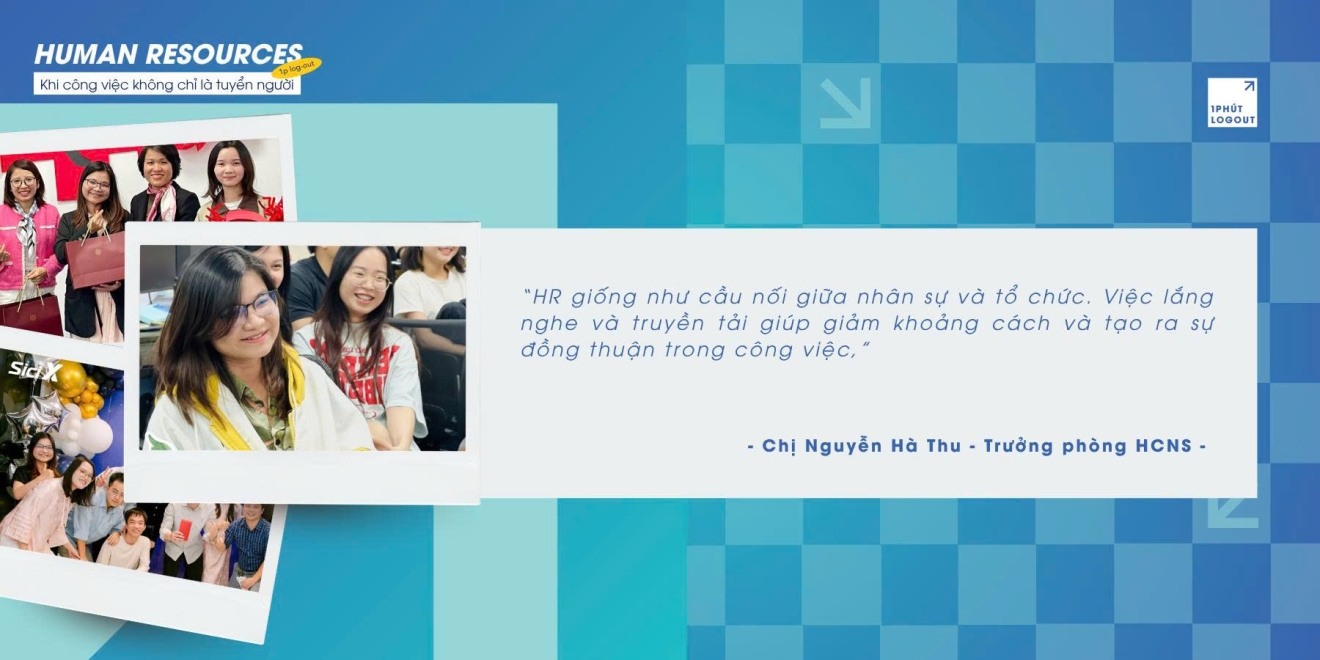
“HR is like a bridge between employees and the organization. Listening and communicating effectively help reduce gaps and create greater alignment at work,” said Ms. Ha Thu.

According to her, corporate culture is not built through slogans or isolated events. Rather, it is shaped by countless small interactions that occur throughout everyday work.

And HR is the function that helps maintain the rhythm of those interactions in a sustainable way.

What Makes HR Meaningful

When asked what has kept her committed to the profession for so many years, Ms. Ha Thu believes the answer is not found in processes or policies, but in people.

It is seeing an employee grow from someone uncertain in their early days into a confident professional who masters their responsibilities and advances in their career.

It can also be found in seemingly small moments—when someone feels genuinely heard, or when a timely decision helps resolve a situation that once appeared impossible.

“Those moments are what make this work truly meaningful,” she shared.

However, HR is far from being an “easy” profession.

Positioned at the intersection of people and organization, HR professionals frequently face difficult situations: making challenging decisions, handling sensitive matters, and balancing competing expectations from multiple stakeholders.

“This is a profession that requires both empathy and resilience. And it is precisely those pressures that help me grow over time.”

More Than Recruitment, More Than Administration

When asked for advice for those considering a career in Human Resources, Ms. Ha Thu does not focus on opportunities. Instead, she emphasizes the importance of understanding the profession correctly.

HR is not merely about recruitment or administrative tasks. It is a role that demands critical thinking, patience, and a commitment to continuous learning. More importantly, it is a function that directly impacts people—and through people, influences the entire organization.

As businesses increasingly operate on the foundation of people and data, the role of HR is evolving as well. No longer standing on the sidelines, HR has become an integral part of the growth story.

And at SiciX, HR professionals are not simply responsible for hiring talent—they are among those helping keep the entire organization moving forward.

    GỬI THÔNG TIN ỨNG TUYỂN

    Vui lòng điền đầy đủ thông tin dưới đây

    Block "blog" not found